
Outdoor family / Autonomous energy and operation
Solar Lighting
Define nightly load, autonomy, solar exposure, battery environment, mounting and control behaviour before comparing solar-lighting systems.
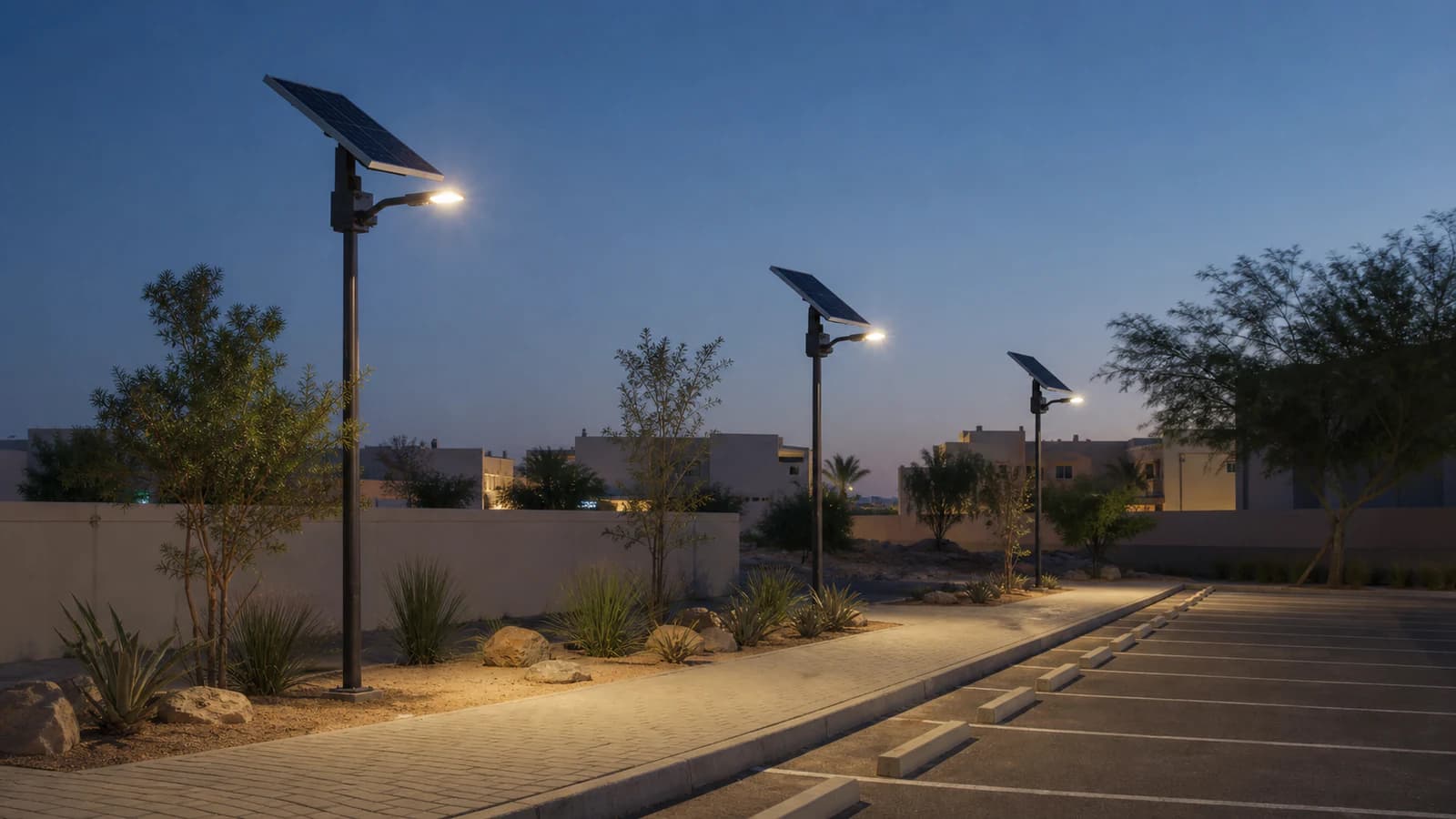
Application frame
Define where the light works before naming a product.
Use the application list to describe geometry, environment, controls and required product documents.
- 01Paths and parks
- 02Remote roads
- 03Compounds and perimeters
- 04Off-grid public areas
0 outdoor models
Models for project selection.
Compare form factor and application, then confirm the exact configuration in the RFQ.
Product enquiry
Send the application requirements for a tailored shortlist.
Include the project conditions, quantity, optics and required documents so suitable candidates can be added to the RFQ.
Start a contextual RFQGCC environment checklist
Make the operating conditions part of the shortlist.
Match the exact model and installation to the real operating environment.
- Maximum ambient temperature and operating schedule
- Dust, sand, water, drainage and cleaning conditions
- Coastal exposure and corrosion requirement
- Mounting, access and maintenance constraints
- Voltage, surge protection and control requirement
- Optical, calculation and project-approval criteria
Common questions
Solar Lighting qualification FAQ
Practical answers for product selection, quotation and project coordination.
Is operating autonomy confirmed here?
No. Autonomy depends on the named system, load profile, battery, controls, solar resource and project conditions.
What should a solar-lighting RFQ include?
Send the location, nightly operating profile, autonomy target, shading and solar exposure, mounting, environmental conditions, controls and maintenance expectations.